What happens when children experience history instead of simply reading about it? When an ancient practice such as yoga becomes part of everyday school life, or when stories shared by grandparents become lessons in values and life?
At Queen Mira International School (QMIS), learning extends beyond textbooks and conventional classrooms. Through experiential learning, heritage experiences, traditional arts and meaningful community interactions, students discover the connection between India’s rich past and the world they are preparing to shape.
Yoga: An Ancient Practice in Everyday Learning
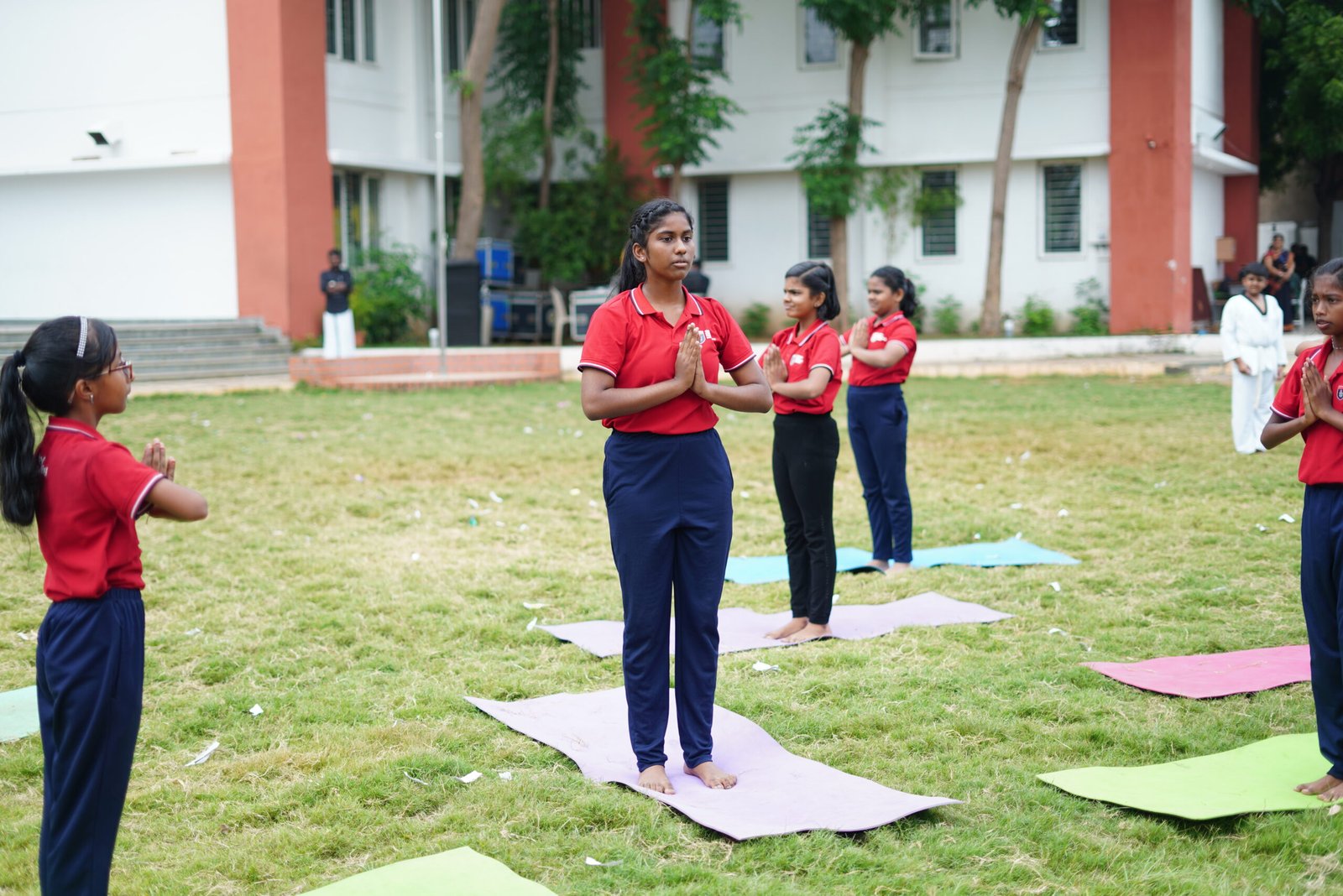
At QMIS, yoga is not limited to an annual celebration — it forms part of the students’ regular curriculum. Through consistent practice, students develop physical awareness, concentration, discipline and an appreciation for holistic well-being, while regular competitions give them opportunities to refine their skills and showcase their abilities. For young learners growing up in a fast-paced world, learning to pause, focus and become aware of their physical and emotional well-being is invaluable — an ancient Indian practice finding real relevance in modern life.
Learning From Those Who Came Before Us
Heritage is not found only in monuments; it lives in people too. Grandparents’ Day gives students an opportunity to connect with an older generation, listen to their stories and appreciate their experiences. Storytelling creates a bridge between generations, offering children insight into how life has changed while nurturing respect for elders and their wisdom — a reminder that their own lives are part of a much longer story.
The Library: Opening Doors to Other Worlds
A strong reading culture forms another key part of experiential learning at QMIS. Students are encouraged to use the library and build the habit of reading, letting books carry them through different periods, cultures and perspectives without leaving the classroom. Reading strengthens language and comprehension while encouraging imagination, reflection and empathy — turning the library into a space where curiosity grows and lifelong learning begins.
Letter Writing: The Value of Thoughtful Communication
In a world of instant digital messages, letter writing gives children a chance to slow down and express their thoughts carefully. Through classroom letter-writing experiences, students learn to organise their thoughts, communicate feelings, and consider the perspective of the reader — developing empathy, gratitude and thoughtful communication through a traditional form that remains deeply relevant today.
Traditional Arts: Practice, Creativity and Perseverance
Traditional arts offer another meaningful connection to India’s cultural heritage. Through regular practice and competitions, students refine their skills, demonstrate perseverance and gain confidence, while also learning to appreciate effort and celebrate the achievements of others. Practice builds skill. Perseverance builds character. Expression builds confidence.
From Heritage to Global Readiness
Together, yoga, heritage interactions, traditional arts, storytelling and reading help students develop curiosity, empathy, creativity and responsibility — qualities essential to becoming a well-rounded, globally aware individual. A child who learns to value their own culture approaches the wider world with greater openness and confidence.
At QMIS, experiential learning connects past, present and future — helping students explore heritage, engage with tradition, and build the confidence to shape what comes next.
Curious how QMIS blends heritage with modern pedagogy? Explore our experiential learning programme.