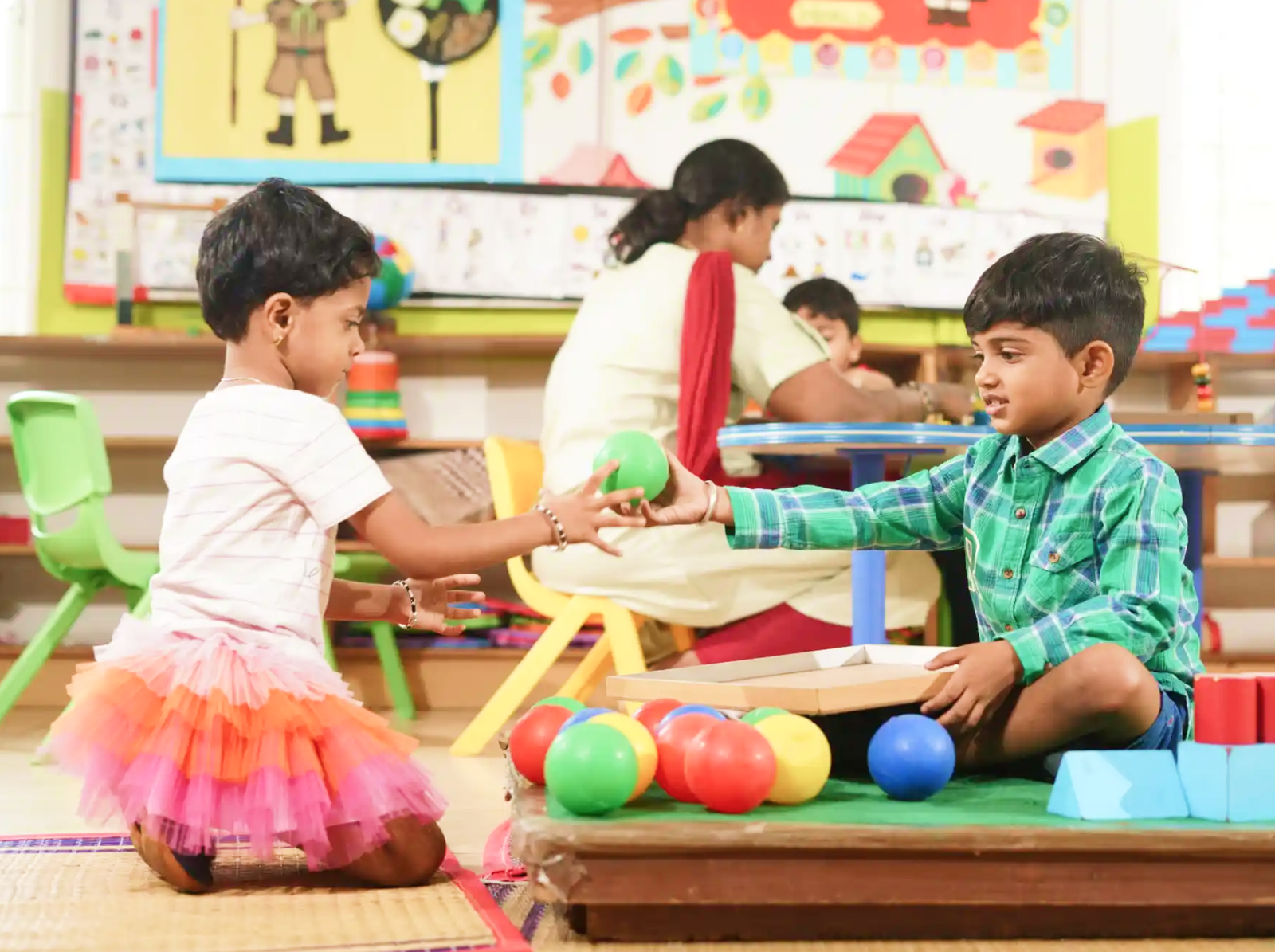
Your child is growing up. Is their school helping them grow, too?
Your child starts recognising familiar words on signs. Count the steps to the front door. Asks questions you never expected. Tells you a story that begins with one thing and ends somewhere entirely different.
One day, your child asks you to read the same story for the fifth time. Next, they try reading a familiar word on their own. They count their toys, ask endless questions, and proudly explain something they have just discovered.
Suddenly, you notice just how much they are learning from the world around them. These little moments remind us how quickly children grow—and how much they are learning along the way.
These are the years when curiosity begins connecting with understanding—and when many parents start thinking about the next stage of their child’s education: “Which school will give my child the right foundation for the years ahead?”
Choosing a kindergarten school means looking beyond the idea of school readiness. It means considering how a child can strengthen early learning skills, develop independence, communicate with others, and gradually become familiar with more structured classroom learning.
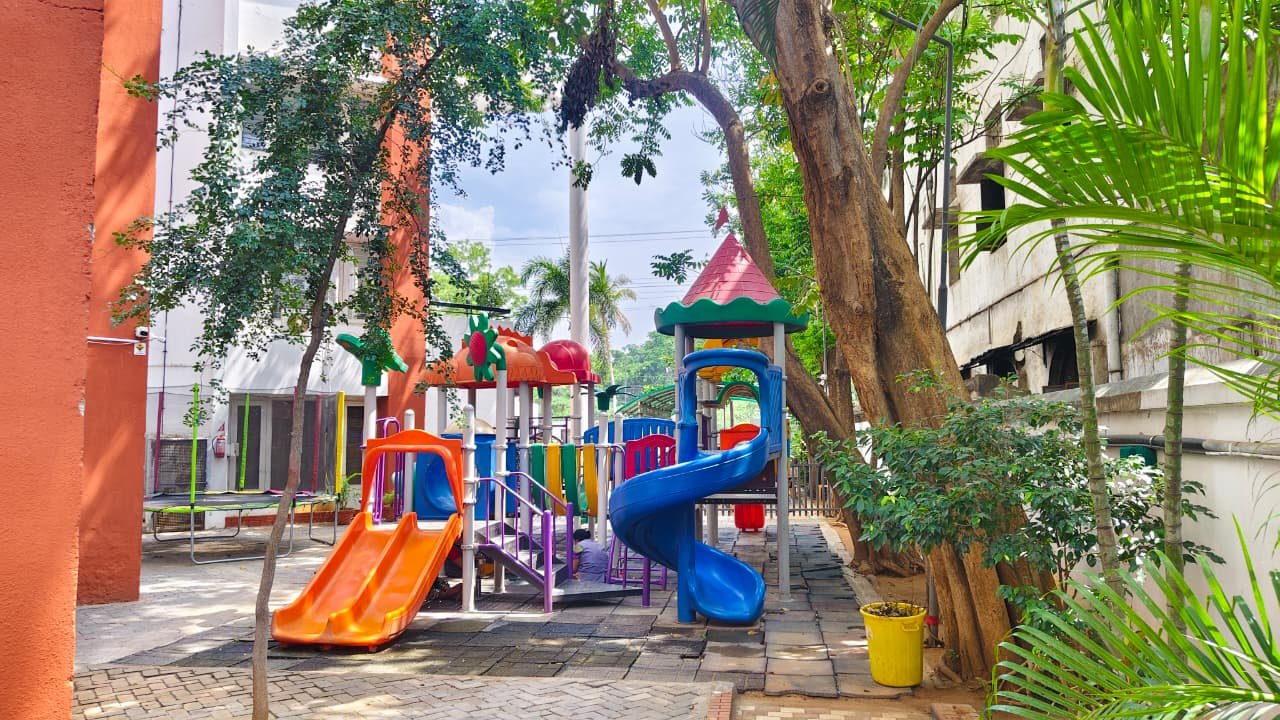
If you’re searching for the best kindergarten school in Madurai, look beyond rankings, advertisements and attractive classrooms. Consider how a school approaches early learning, encourages curiosity, develops foundational skills and helps children become familiar with the routines of formal education.
At Queen Mira International School, Kochadai, Madurai, families can explore the kindergarten years through an approach that balances structured learning with activities.
The aim is to give children opportunities to build foundational skills while continuing to ask questions, explore ideas and discover what they can do.
Young children are natural investigators.
They compare objects, notice differences, repeat activities to see what happens and find their own ways to solve small problems. A simple building activity can introduce ideas about balance. A story can invite children to guess what happens next. Counting everyday objects can make numbers feel more familiar.
Kindergarten offers opportunities to build on this curiosity with more guided learning experiences.
Children begin developing early literacy and numeracy, following instructions, sharing ideas and working through activities with increasing independence. They also continue to learn through creative expression, conversation, movement and exploration.
This is where structured learning and hands-on experiences can complement each other.
Children need guidance to develop foundational skills. They also need opportunities to use those skills, make connections and express what they understand.
Every parent wants their child to have a good start. But what does that actually look like in a kindergarten classroom?
It isn’t just about how many letters a child can recognise or how confidently they can count. It’s also about how they listen, express ideas, participate in activities and approach something unfamiliar.
When comparing kindergarten schools in Madurai, consider these five areas.
Children need opportunities to become familiar with letters, sounds, numbers, shapes and early concepts. They also benefit from stories, conversations, guided activities and opportunities to explore what they are learning.
Ask how the school balances structured learning with activities that help children practise and apply foundational skills.
Why do some objects float? How does a plant grow? What happens when two colours mix?
Children’s questions can open doors to new learning. A kindergarten programme should give children age-appropriate opportunities to observe, explore, ask questions and express what they notice.
Learning also happens when children listen to instructions, share materials, take turns and communicate with classmates.
These experiences can help children practise the skills involved in participating in a classroom and learning alongside others.
Repeatedly practicing everyday routines and simple tasks helps children develop independence.
The aim isn’t to expect every child to do everything alone. It’s to give them opportunities to practise, learn and grow at an appropriate pace.
Kindergarten helps establish foundations for primary education through early literacy, numeracy, communication and classroom participation.
When evaluating a school, ask how its kindergarten programme connects with the next stage of learning. This will give you a clearer picture of what your child may experience as they progress.
These questions are more useful than choosing a school based on a single feature alone.
Listening to stories, recognising letters and sounds, learning new words and expressing ideas all contribute to early literacy development.
Children gradually become more familiar with the building blocks that support reading, writing and communication.
Counting, recognising numbers, comparing quantities, identifying patterns and exploring shapes introduce mathematical concepts through age-appropriate learning experiences.
These foundations help children begin to understand how numbers relate to the world around them.
Art, music, storytelling and other creative activities give children opportunities to communicate ideas, explore possibilities and express themselves in different ways.
The finished work is only one part of the experience. The process of imagining, choosing and trying matters too.
Classroom activities foster essential social skills, including following instructions, sharing resources, turn-taking, and peer communication.
These experiences help children practise the social skills involved in learning alongside others.
Classroom activities foster essential social skills, including following instructions, sharing resources, turn-taking, and peer communication.
These experiences help children practise the social skills involved in learning alongside others.
Parents often search for kindergarten admission without knowing which class is the right entry point.
For parents exploring kindergarten admission in Madurai, it helps to understand how these stages fit into the broader early learning journey.
LKG and UKG typically build on the foundations introduced during earlier years. Children continue developing language, early numeracy, classroom participation and the ability to approach learning activities with growing familiarity.
The exact curriculum, progression and expectations should be discussed with the school, since these can vary by programme and age group.
Rather than focusing only on whether a child can complete a particular task, parents can also look at broader signs of development: Can the child communicate their needs? Are they becoming more familiar with routines? Do they show curiosity? Are they beginning to participate in activities and interact with others?
Children develop at different rates. These questions can help parents have a more meaningful conversation with the school about their child’s learning journey.
A short conversation can help you understand the next step much more clearly.
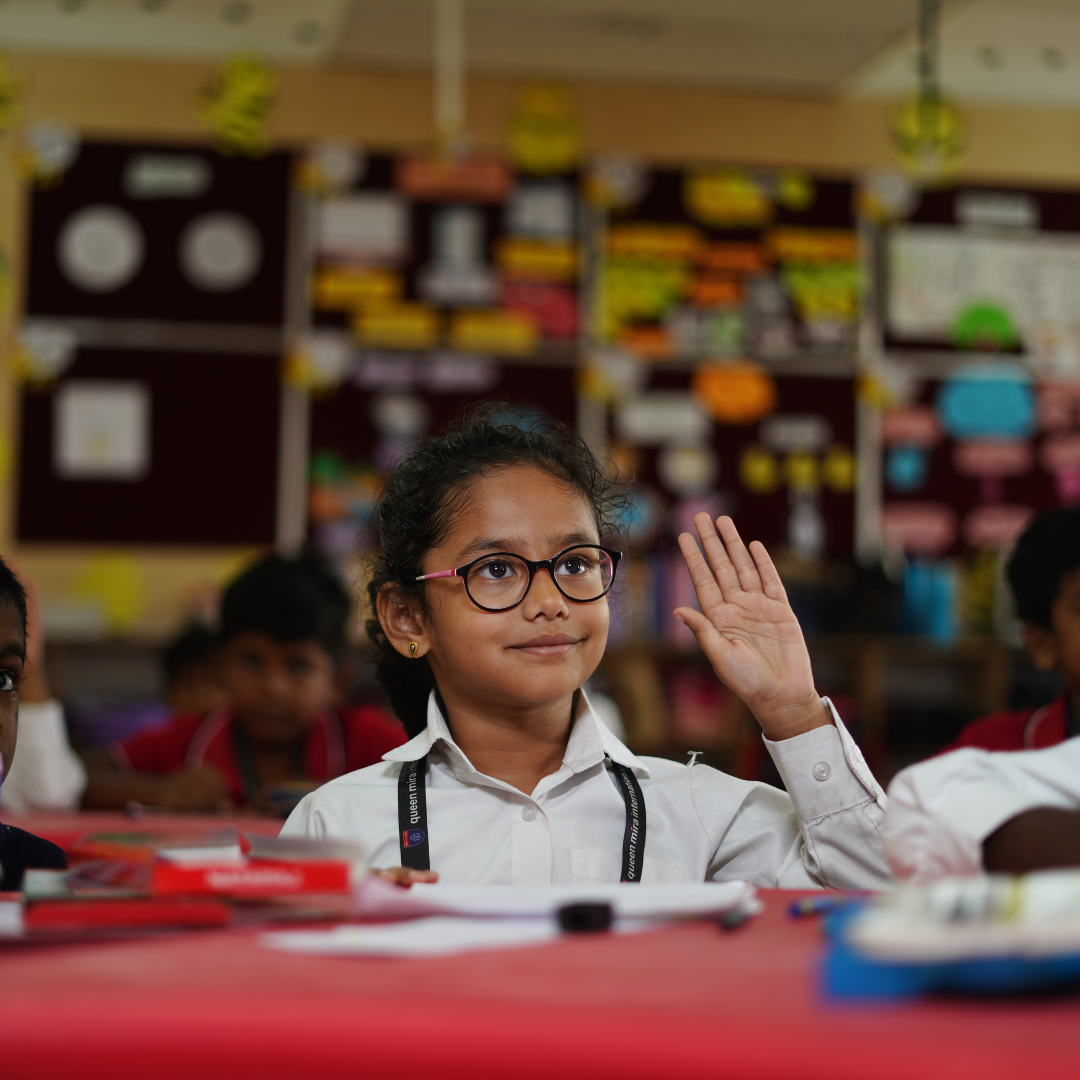
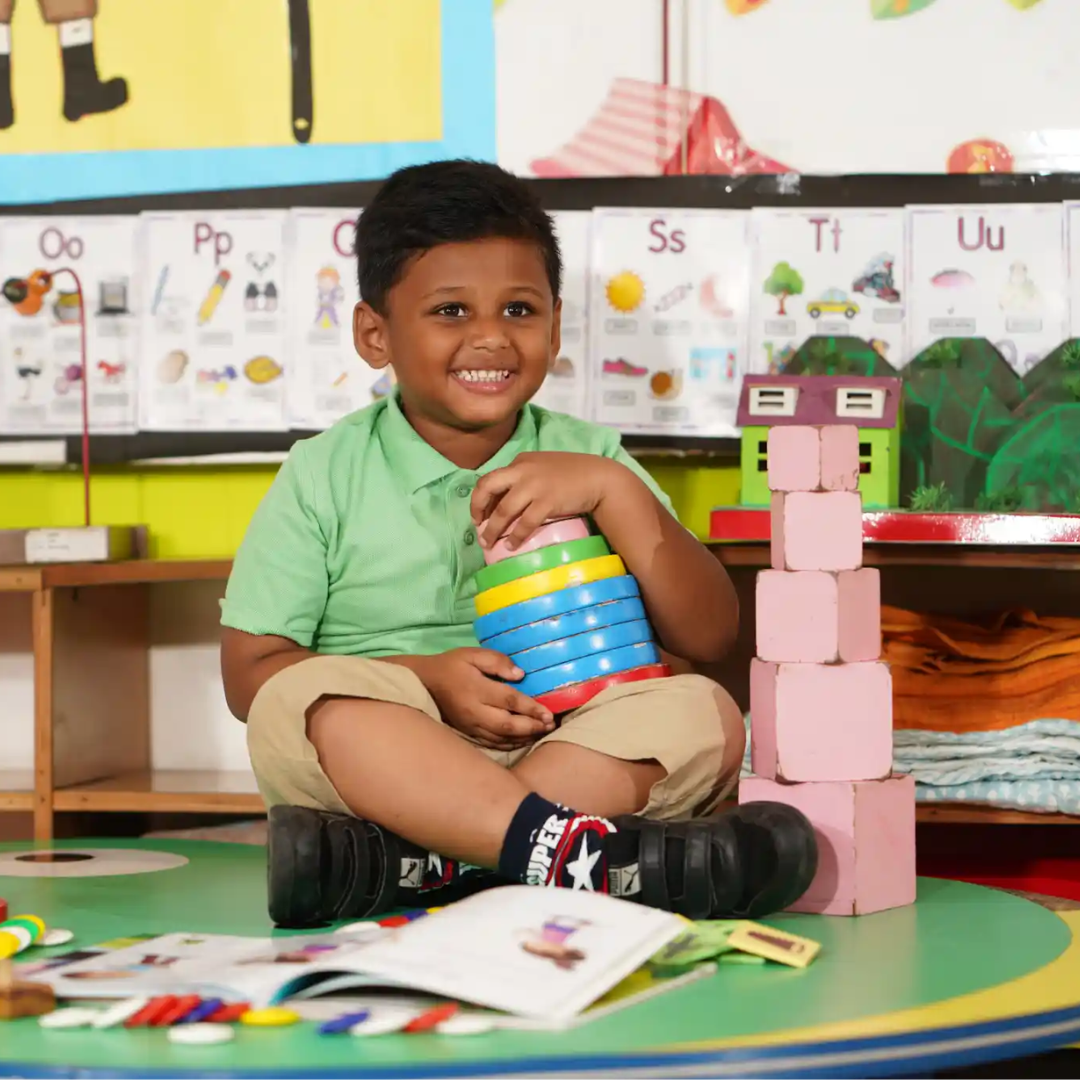
Moving towards Grade 1 brings new expectations. Children encounter more structured learning, increasingly developed foundational skills and new classroom routines.
Preparation for this transition should not be reduced to making children memorise as much as possible before they reach primary school.
It also involves building familiarity with language and numbers, listening and communication, following instructions, participating in activities and approaching unfamiliar tasks with support.
Most importantly, children should continue to have opportunities to wonder, explore and enjoy discovering something new.
When comparing kindergarten schools in Madurai, ask how the programme balances foundational learning with activities and how it helps children become familiar with the expectations of the next stage.
These details can tell you more than a list of subjects alone.
A school website can tell you about a programme, but speaking with the school gives you the opportunity to explore the details that matter to your family.
If QMIS offers school visits during the admissions period, a campus tour may help you understand the learning environment and ask questions about the kindergarten experience.
You might want to ask:
Write down your questions before the visit. The more relevant information you gather, the easier it becomes to compare your options.
Contact QMIS to confirm whether visits are available, how to arrange one and what you can expect during the visit.
Ask whether LKG or UKG is appropriate for your child’s age and previous schooling, if applicable.
Confirm the school’s current age criteria for the intended class and academic year.
Ask the admissions team for the current list of documents and application requirements.
Confirm application deadlines, school visit availability and any other relevant dates directly with QMIS.
Check whether applications are being accepted for the class you’re interested in and whether places are available.
If you would like to see the learning environment before making a decision, enquire about the possibility of arranging a campus visit.
Your child does not need to know everything before entering the next class. They need opportunities to keep learning, practising, asking questions and discovering new things.
There is no single checklist that can tell every parent which school is right for their child. What matters is understanding the programme, asking meaningful questions and making a decision with confidence.
Kindergarten is one part of that journey: a time to strengthen foundations while keeping curiosity alive.
If you’re searching for a kindergarten school in Madurai or looking into kindergarten admissions for 2026–27, take the time to explore Queen Mira International School and speak with the admissions team about LKG, UKG and the early-years programme.
Speak with QMIS about LKG and UKG admissions, confirm current availability and take the next step in your child’s educational journey.