Artificial Intelligence is now part of everyday life voice assistants, recommendation systems, smart devices, and image recognition surround today’s children. For schools, the real question isn’t whether students should learn about AI, but when and how to begin.
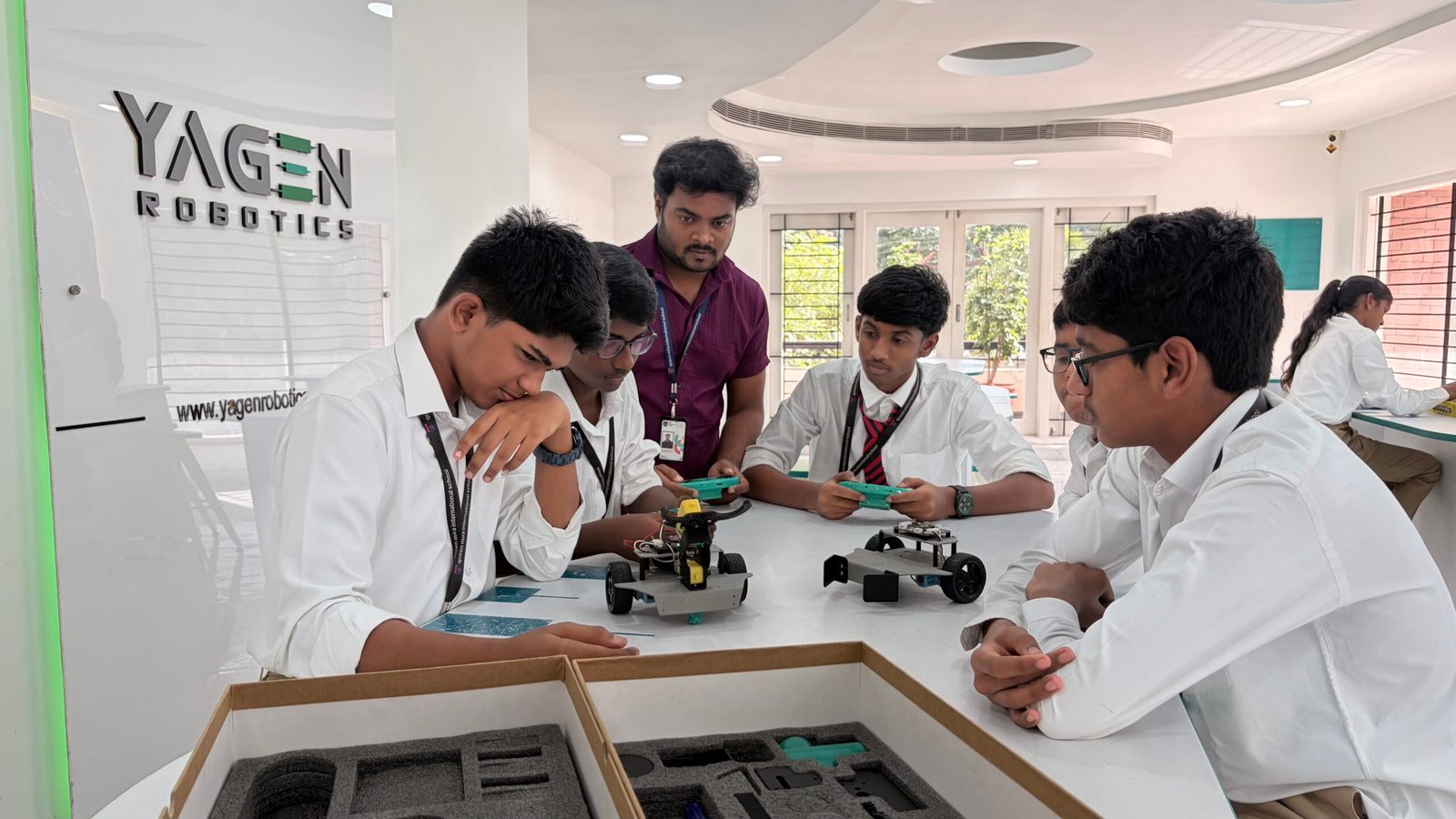
At Queen Mira International School (QMIS), the answer starts early. Computational thinking and AI literacy are introduced from Grade 1, onward using computing textbooks from the Tamil Karky Foundation. This progressive approach aligns closely with NEP 2020, NCFSE 2023, and the CBSE 2026–27 curriculum, all of which embed computational thinking and AI within future-ready skill development.
AI Education Starts with Thinking, Not Tools
For a young learner, AI shouldn’t begin with algorithms or programming languages it should begin with how computers work and how problems can be solved systematically. From Grade 1, QMIS students start building the mental habits that underpin computational thinking: recognising patterns, organising information, following logical steps, and breaking problems into manageable parts.
These foundational skills, though simple at first, become the building blocks for more advanced AI understanding as students progress through school.
From Using Technology to Understanding It
Most children today are comfortable using technology opening apps, searching for information, and interacting with devices. QMIS pushes students a step further: from “How do I use this?” to “How does this actually work?”
A student encountering a voice assistant, for instance, might explore:
- How does a computer understand what we say?
- How does a machine recognise patterns?
- Why can AI sometimes make mistakes?
- Can an AI system make an unfair decision?
- Should we always trust an AI-generated response?
These questions build genuine AI literacy, not just familiarity with apps.
A Curriculum Aligned with CBSE 2026–27
QMIS starts structured Computing education from Class 1, mirrors CBSE’s mandate to introduce Computational Thinking and AI for Classes III–VIII in an age-appropriate, competency-based way. The framework highlights logical reasoning, pattern recognition, data interpretation, algorithmic thinking, creativity, collaboration, and ethical awareness competencies QMIS begins cultivating well before formal AI instruction starts.
The goal isn’t to turn young children into AI specialists. It’s to give them the right foundations, early and often.
Responsible Thinking Matters as Much as Technical Skill
AI education at QMIS goes beyond technical understanding. Students learn that AI systems have limitations and biases, and that a fast answer isn’t automatically a correct one. This builds a crucial habit: questioning technology instead of blindly trusting it a mindset woven into QMIS’s broader focus on creativity, collaboration, and critical thinking.
Teachers Remain at the Centre
AI in education doesn’t mean replacing teachers. At QMIS, teachers continue to design meaningful learning experiences, ask challenging questions, and guide students in evaluating what they discover. The goal isn’t dependence on AI for answers it’s confident, independent learners who can question, analyse, create, and make informed decisions.
The QMIS Learning Journey
QMIS frames its approach as a clear progression:
Computational Thinking and Education (Grade 1) → AI Literacy → AI Application → Responsible AI Use
This early, structured start is what makes QMIS’s AI education meaningful rather than trend-driven.
The future won’t belong only to children who know how to use AI it will belong to those who understand what AI can and cannot do, when to use it, and when human judgement must lead. At QMIS, that journey begins as early as Grade 1.