How QMIS Is Preparing Students for the Change
For parents, CBSE Class 12 in 2026–27 marks more than the start of a new academic year — it is a structural shift in how secondary education is taught and assessed. Aligned with NEP 2020 and NCFSE 2023, the new framework moves beyond completing chapters and preparing for exams, placing emphasis on competencies, conceptual understanding, experiential learning, multidisciplinary education and Computational Thinking & AI. For parents of children entering Grade 9, the natural question is: how is my child’s school preparing for this?
What Is Changing in Class IX
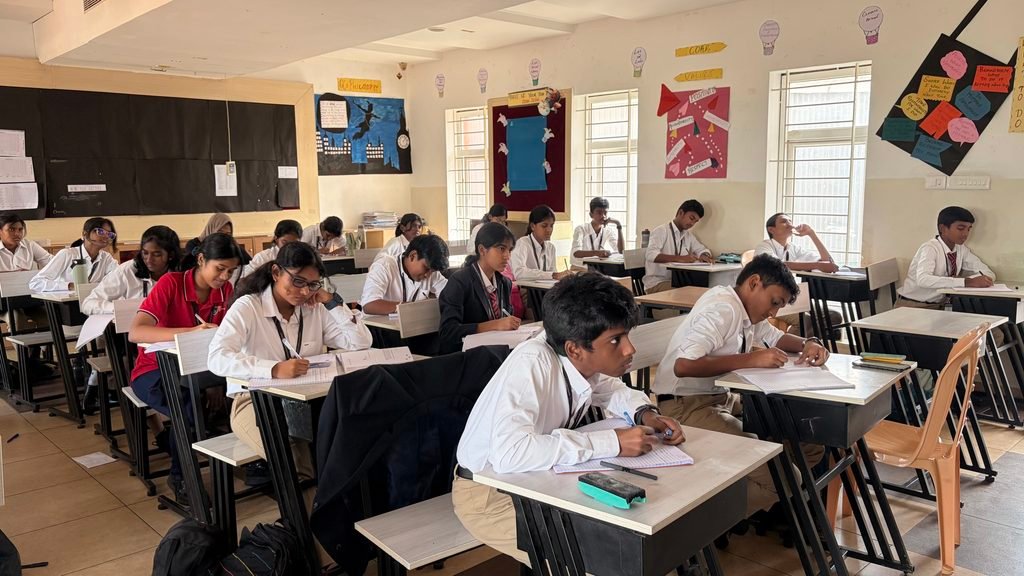
Mathematics and Science now have a common standard course, with Advanced Mathematics and Advanced Science offered as optional additional content — all students take the common 80-mark paper, while those opting for Advanced sit an additional 25-mark exam testing higher-order thinking. Class 9 and 10 are treated as a composite course, bringing together academics with Art Education, Physical Education, Vocational Education and Interdisciplinary learning. Computational Thinking and AI are also formally introduced from Classes 3 –8, building logical reasoning, pattern recognition and algorithmic thinking, ahead of becoming a full subject for Classes 9 – 12 from 2027–28.
Assessment Is Changing Too
Around 50% of Board examination questions will now be competency-focused — case-based, sourcebased, data-interpretation and application-oriented. Internal Assessment, too, is designed to move beyond memorisation, giving students repeated opportunities to demonstrate understanding.
QMIS Was Already Prepared — Since 2024
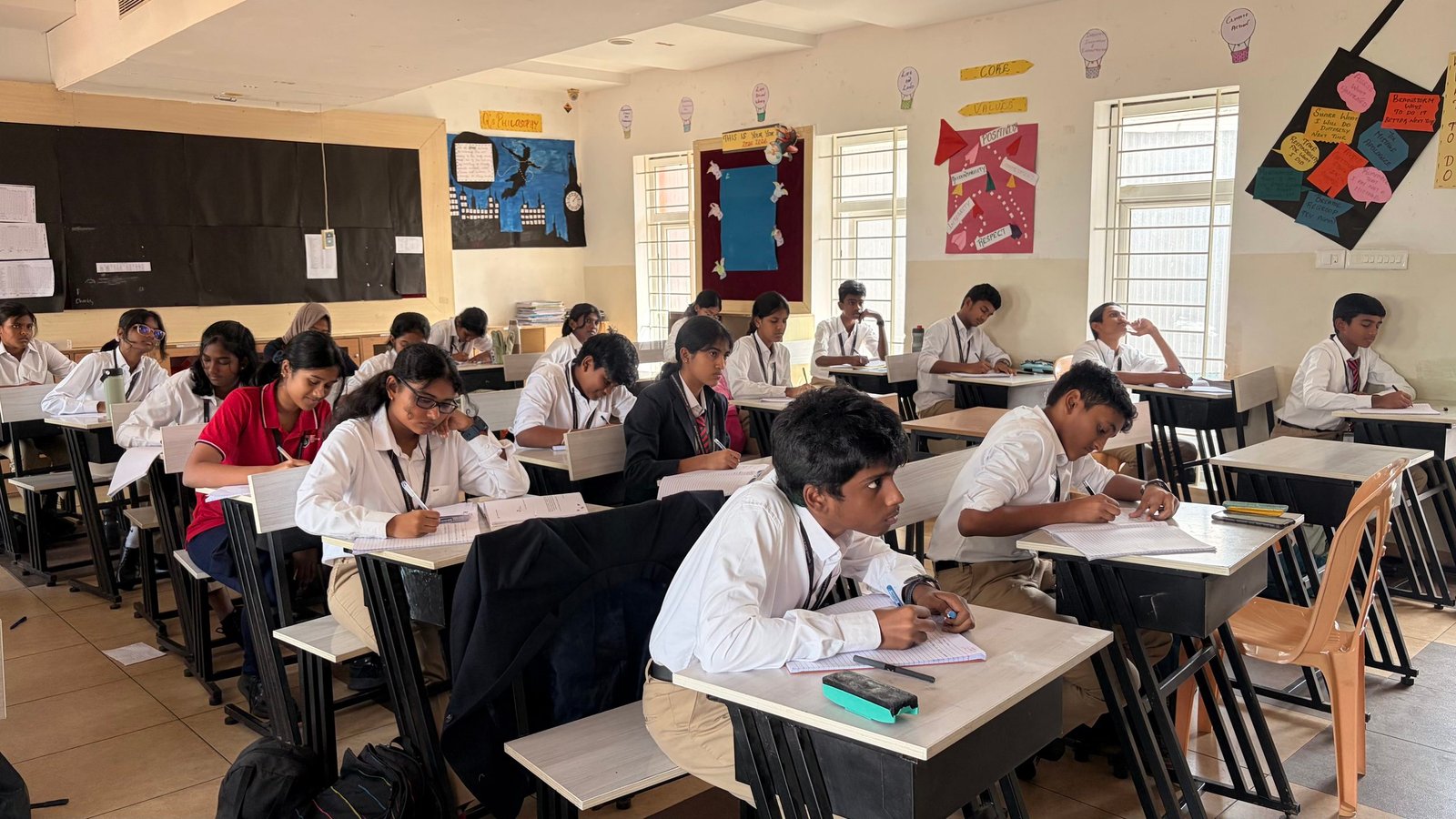
This is where QMIS’s head start becomes significant. While CBSE’s competency-based shift takes effect from 2026–27, QMIS introduced competency-based assessment from Grade 1 onwards in 2024 — two years ahead of the mandate. Instead of testing recall, assessments at QMIS have already been designed around application, reasoning and real-world problem-solving from the earliest grades.
The impact has been visible in classrooms: children are more confident tackling unfamiliar questions, more comfortable with case-based and situational problems, and better prepared to think rather than merely recall. By building this muscle early — from Grade 1 rather than Grade 9 QMIS students approach change with familiarity, not anxiety. It has made them proactively ready for an unseen, evolving future, rather than reactively adjusting when the syllabus changes around them.
This is not a coincidence but a natural extension of QMIS’s skill-based curriculum philosophy — the same thinking that underpins its 3B Curriculum (Broad, Balanced, Blended), its STEAM programme and its student-driven learning model. CBSE’s 2026–27 overhaul, with its focus on competencies over content and skills over syllabus completion, resonates directly with a direction QMIS has already been building towards.
Why This Matters for QMIS Parents
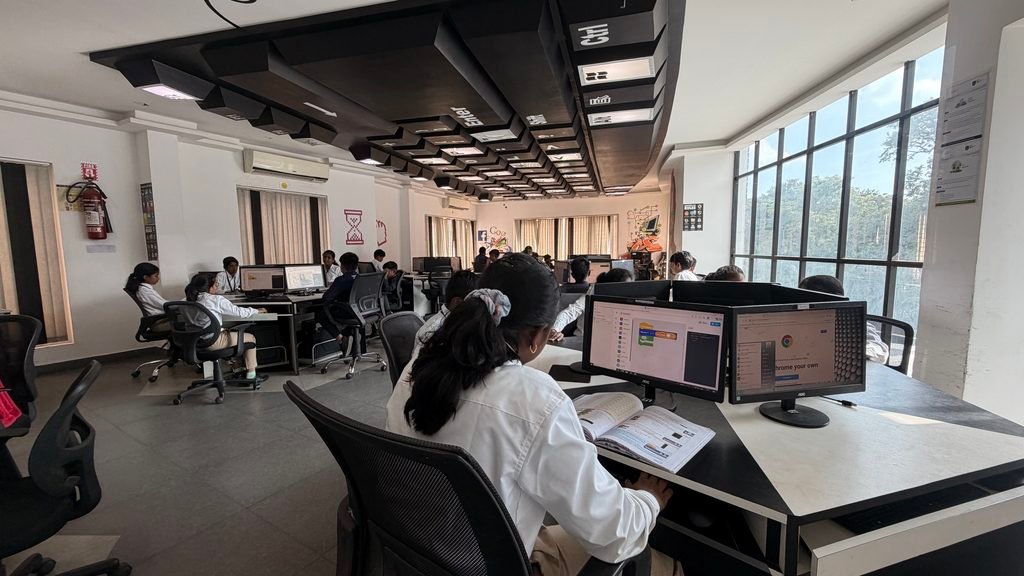
For a child entering Grade 9 elsewhere, this transition could feel disruptive. At QMIS, it will feel like continuity. The school’s blend of CBSE requirements with experiential learning, STEAM, technology integration and early competency-based assessment gives students a running start into a curriculum designed to reward thinking over memorising.
The future of CBSE education is not about adding new subjects — it is about changing the learner. At QMIS, that shift began years before it became a mandate, and the mindset behind CBSE 2026–27 is already part of the everyday QMIS classroom.